
We all do it, figure if we take it to an op shop it’s better for the environment and prolongs its life, but what some of us may fail to realise is that if it really deserves dumping then it’s unfair to dump it on a charity shop as they’ll be lumbered with the dumping fees.
“Maybe people think we get free waste services, but we don’t and waste is a significant cost for us,” says Ruth Seabright of the Hospice shop.
Richmond SPCA manager Susan Naysmith says they’re often inundated with clothing they can’t sell and says a common concern among those in the industry is that people are potentially dumping their goods on op shop premises to avoid the fees.
Though she quickly points out that a lot of people “genuinely don’t understand that a lot of what they’re leaving outside can’t be used”.
Either way it’s become enough of a problem that a meeting was called with representatives from the Nelson City Council and Tasman District Council (TDC) and had 27 attend from across the area’s op shops.
“Our advice is to only take your second-hand items to the store when they are open and to check with the staff before dropping anything off. We think it’s really important for people to know that if rubbish is dumped at the door of a charity shop then they will have to pay to dump that material,” says David Stephenson, of TDC waste management and minimisation.
At St. Vincent De Paul, Ross Norgate says they rely on the funds from selling pre-loved goods to provide food parcels, accommodation and furniture to help families in need.
“All they’re (the dumpers) doing is taking money that should be going to the charity but instead it goes on tip fees,” says Ross.
Some shops have installed cameras and signage.
Both councils are encouraging the op shops to share any information that may identify dumpers as councils have the ability to follow up under the Litter Act.
So next time you’re making a trip to pass on your goods to an op shop just do a double take and ask yourself if your goods really are saleable?
Charity shops despair at poor quality goods
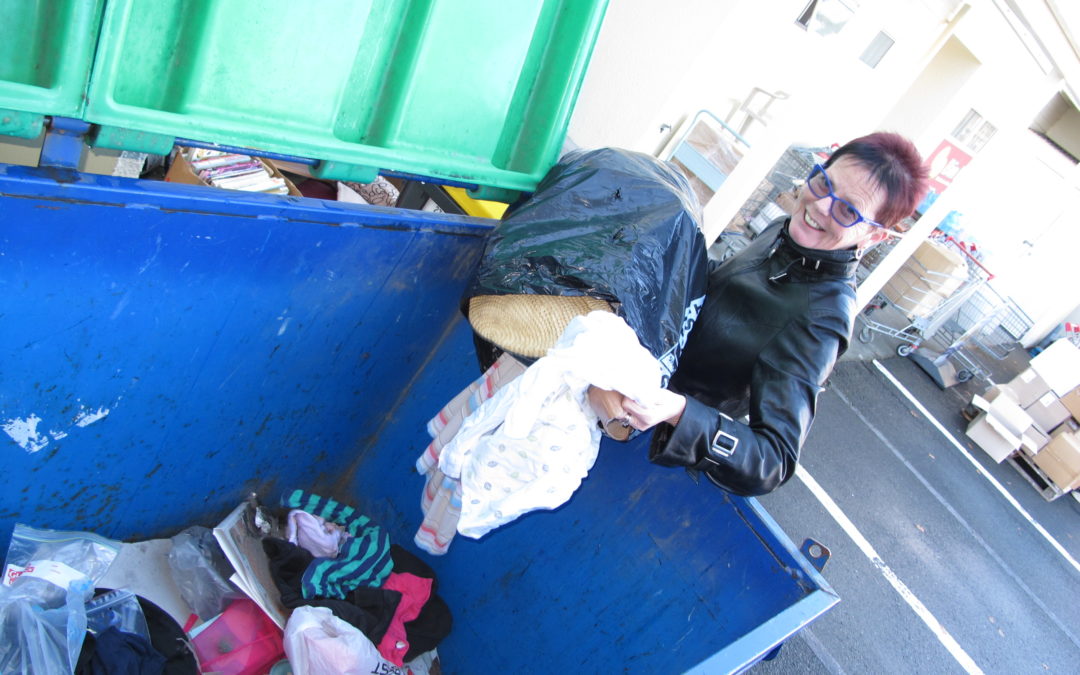
Susan Naysmith is forced to dump more unsaleable items into the SPCA skip. Photo: Emily Beaumont.
Spread the love.