
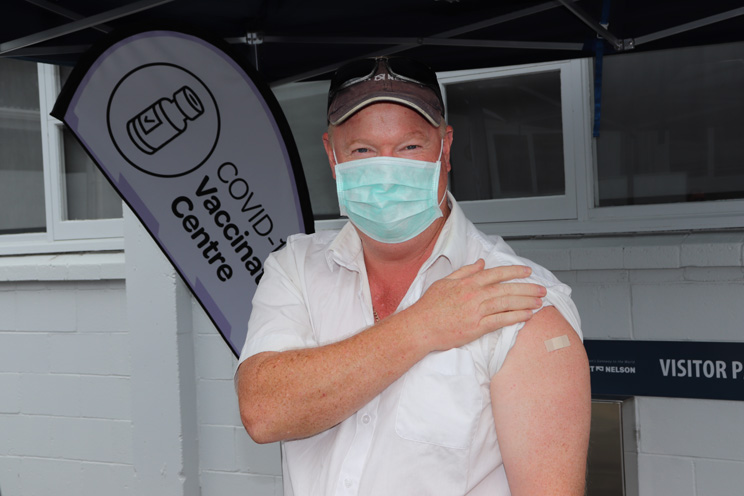
Dean Hardman was happy after receiving one of the regions first Covid vaccines on Monday, knowing he had taken a big step to keep his household safe.
A few vaccinators went first as a rehearsal. Although those administering the vaccine give vaccines as part of their usual work, they wanted everything to run as smoothly as possible, and it did.
“We are quite lucky to be first. There is a risk when we go onto ships, although often those on the ships have been in their own bubbles for months. It’s more that we don’t want our family to get sick – that is the concern,” says Dean Hardman.
In deciding who to vaccinate first, port workers were consulted, and it came through clearly that they wanted their households to be vaccinated with them.
About 50 vaccines are being given daily to workers and their households.
Vaccines are not being given to anyone under 16 years old as they have not been proven to work in that demographic.
Testing will continue as there is not data to show people who have been vaccinated can no longer pass on Covid.
It is likely that health workers who meet patients before they are screened for infection will be vaccinated after port workers. This group would include ambulance officers, receptionists and staff in the emergency department.
“Who is the next most vulnerable is always a compromise between who would be sickest if they did get it and those who are more likely to get it,” says Nick Baker.
He says we are sitting on a knife-edge so need to support efforts to eliminate the spread, and that may affect which communities receive the vaccine first.
The vaccine cannot be given at the same time as the yearly flu injection.
“There will need to be a pause between the flu injection and the Covid vaccine,” says Nick.
But Nick thinks that it may be possible for the vaccine to be given in cars in a similar way to last year’s flu clinics as long as there is the ability to observe patients after receiving the vaccine, and the ability to manage any adverse reaction.