
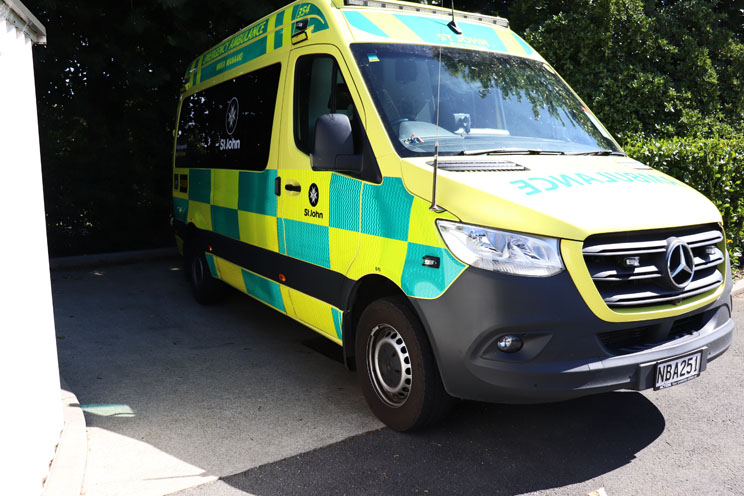
Over one hundred local residents turned out to a meeting on 1st of February to discuss the future of their paid ambulance officers after hearing that St John New Zealand is considering removing the paid positions.
Simon Blakemore from Murchison and Districts Community Council’s understanding is there are currently two ambulance officers (EMTs) both on call 96 hours on and 96 hours off and one is paid a 0.2 percent of a wage, the other 0.3 percent. There are also around eight volunteers.
“My understanding is that they are not legally paying enough and probably exposing themselves to a claim so won’t continue paying anything at all,” says Simon.
West Coast Tasman MP Damien O’Connor attended the meeting and said that St John New Zealand has determined that the service as it is is unsafe and unsustainable.
“Covering such long hours is unrealistic and the salary and legal obligation to employees can’t be met. Effectively they have legal obligations and health and safety and payment that they feel they can’t sustain,” says Damien.
“Changes to both our operational requirements and the legislative environment means that the current approach cannot continue,” says St John Buller Territory Manager Joelle Fox.
Simon Blakemore says Murchison has very good support from PRIME, which is where a doctor or nurse attend serious callouts.
“Currently ambulance services in Murchison rely heavily on the commitment of two retained staff, supported by St John volunteers and our partnerships with PRIME and Fire and Emergency New Zealand,” says Joelle.
“Murchison is lucky to have a basic health centre and a doctor in their community. Many rural communities don’t have that level of expertise and PRIME response. That’s not necessarily driving the St John’s decision but will be a major factor in the decision,” says Damien.
He says there must be an ambulance service there, but how to run it effectively and to give patients the most timely care is challenging for rural areas.
The loss of the two EMTs is a great concern for the eight or nine volunteers as they worry about what they may have to deal with on their own.
The EMTs are reluctant to lose the small amount they are currently paid.
“I can understand the EMTs response as part paid people. In the issue of skill and volunteers, we need to look at other communities that rely solely on volunteers to see how they manage. Whether that requires a paid person or not is not something I can judge,” says Damien O’Connor.
Simon Blakemore said he was very disappointed at the meeting as he thought they were there to talk about submissions, but he got the feeling that everything was ‘set in stone.’
Damien says that St John’s have a responsibility to all New-Zealanders including rural communities and that while he understands the dilemma facing St John New Zealand, he is not convinced the solution they are talking about is the best and that is the discussion that needs to occur.
“I think St John would be stupid to have anything set in concrete before feedback from community and until they have looked at other ways to work through the challenges while reassuring the community,” says Damien.
Joelle Fox said St John was pleased to be invited to the meeting of the Murchison and Districts Community Council and to be able to discuss their proposal and answer a range of questions from the members of the Murchison community.